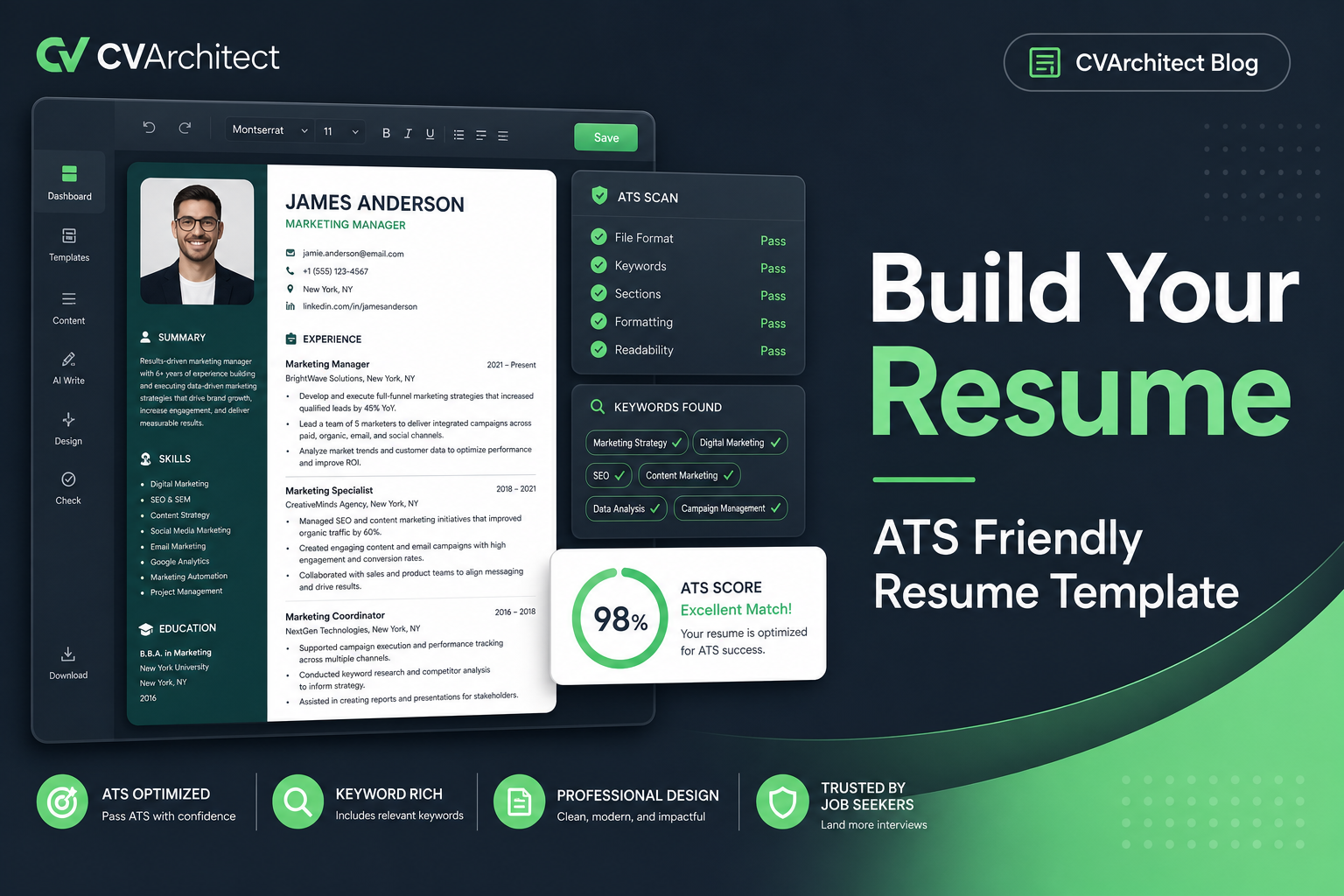

Here is something most job seekers do not think about. When a recruiter at a company with 50 open positions gets a request to fill a role, they do not start by reading resumes from top to bottom. They open the ATS, type in 3-5 keywords, and start reviewing whoever shows up in the results. If your resume does not contain those specific terms, you are invisible. Not rejected. Invisible. There is a difference, and it matters.
I spent 6 years as an agency recruiter before moving in-house, and I can tell you exactly what keywords we search for in every major industry. This is not guesswork. These are the actual terms that recruiters type into Greenhouse, Lever, Workday, and LinkedIn Recruiter to find candidates matching open roles.
This guide covers 300+ keywords across 8 major industries, explains how Boolean search works (so you understand how recruiters combine keywords), shows you exactly where to place keywords on your resume, and walks you through a keyword audit process to identify gaps in your current resume. By the end, your resume will show up in every relevant ATS search.
How Keyword Searching Actually Works in an ATS
Before I list the keywords, you need to understand how recruiters actually use them. We do not just type one word. We use Boolean search strings, which means we combine terms with AND, OR, and NOT operators. For example, if I am looking for a software engineer, I might search: "Python" AND "AWS" AND ("machine learning" OR "ML") NOT "intern." This finds candidates who have Python AND AWS experience AND either machine learning or ML on their resume, while excluding interns.
This matters for you because it means having just one or two matching keywords is often not enough. If my search requires Python AND AWS AND machine learning, your resume needs all three to appear in the results. Missing even one of those terms drops you from the search entirely.
The four Boolean operators recruiters use
- •AND — Both terms must appear. "Project management AND Agile" returns only candidates with both terms. This is the most restrictive operator.
- •OR — Either term can appear. "React OR Angular OR Vue" returns candidates with any of these frameworks. Used to broaden searches for similar skills.
- •NOT — Excludes candidates with a specific term. "Marketing NOT intern" excludes entry-level candidates. Used to filter out irrelevant results.
- •Quotation marks — Searches for an exact phrase. "Machine Learning" (in quotes) finds that exact phrase, not pages that mention "machine" and "learning" separately.
Understanding these operators is crucial because it tells you that synonyms matter. If a recruiter searches for "project management" and your resume only says "managed projects," you may not appear. This is why I recommend including both the standard term and natural variations throughout your resume.

Technology and Software Engineering
Tech recruiting is the most keyword-driven industry. Recruiters search for specific programming languages, frameworks, tools, and platforms. Being vague about your tech stack is the fastest way to get overlooked.
High-frequency search terms (what we type first)
- •Programming Languages: Python, JavaScript, TypeScript, Java, Go, Rust, C++, SQL, Ruby, Swift, Kotlin, Scala, R, PHP
- •Frontend: React, Next.js, Vue.js, Angular, HTML5, CSS3, Tailwind CSS, Redux, GraphQL, Webpack, Vite, Storybook
- •Backend: Node.js, Django, Flask, Spring Boot, Express.js, FastAPI, REST API, gRPC, microservices, serverless, API design
- •Cloud and DevOps: AWS (EC2, S3, Lambda, RDS, ECS, CloudFormation), Google Cloud Platform (GCP), Azure, Docker, Kubernetes, Terraform, CI/CD, Jenkins, GitHub Actions, ArgoCD, Helm
- •Data: PostgreSQL, MongoDB, Redis, Elasticsearch, Apache Kafka, Snowflake, dbt, Apache Spark, ETL pipeline, data warehouse, BigQuery, Redshift
- •AI and Machine Learning: PyTorch, TensorFlow, LLM, RAG, fine-tuning, NLP, computer vision, MLOps, model deployment, Hugging Face, LangChain, vector database, prompt engineering
- •Methodologies: Agile, Scrum, Kanban, sprint planning, retrospective, user story, stakeholder management, technical specification, code review, pair programming
Always list the specific version or variant when it matters. "React" is good, but "React 18" or "React with TypeScript" is better for senior roles. Also include both the full name and abbreviation: "Amazon Web Services (AWS)" covers both search patterns.
Marketing and Digital Marketing
Marketing keywords have shifted dramatically in the last two years. Recruiters now search for specific tools and platforms, not just general skills. Saying you "know digital marketing" is like saying you "know computers." It tells me nothing.
- •SEO and Content: Google Analytics 4 (GA4), Google Search Console, SEMrush, Ahrefs, keyword research, technical SEO, content strategy, link building, SERP analysis, content calendar, editorial planning, blog management, copywriting
- •Paid Media: Google Ads, Meta Ads Manager, LinkedIn Campaign Manager, programmatic advertising, ROAS, CPA, conversion rate optimization (CRO), A/B testing, retargeting, display advertising, PPC, search engine marketing (SEM)
- •Email and CRM: HubSpot, Salesforce Marketing Cloud, Mailchimp, Klaviyo, ActiveCampaign, marketing automation, drip campaigns, segmentation, lifecycle marketing, lead scoring, nurture sequences
- •Social Media: social media management, Hootsuite, Sprout Social, influencer marketing, community management, short-form video, TikTok marketing, social listening, user-generated content (UGC)
- •Analytics: attribution modeling, cohort analysis, funnel analysis, customer acquisition cost (CAC), lifetime value (LTV), data-driven marketing, Tableau, Looker, Mixpanel, Power BI, dashboard creation
- •Strategy: brand positioning, go-to-market (GTM) strategy, competitive analysis, market research, product marketing, demand generation, ABM (account-based marketing), revenue marketing, growth hacking
Healthcare and Medical
Healthcare is unique because certifications and compliance keywords are often non-negotiable. If your resume does not include the specific certification abbreviation, many recruiters will not even consider you, regardless of your experience level.
- •Clinical: RN, BSN, MSN, NP, PA-C, EMT, paramedic, patient assessment, clinical documentation, treatment planning, patient advocacy, evidence-based practice, care coordination, discharge planning, medication administration
- •Certifications: BLS, ACLS, PALS, CPR certified, board certified, ANCC, state licensure, DEA registration, OSHA compliance, CCRN, CEN, ONS
- •Systems: Epic, Cerner, Meditech, electronic health records (EHR), electronic medical records (EMR), CPOE, telehealth platform, patient portal, clinical decision support
- •Compliance: HIPAA compliance, Joint Commission (JCAHO), CMS regulations, patient safety, infection control, quality improvement (QI), risk management, clinical audit, sentinel event review
- •Administrative: revenue cycle management, medical coding, ICD-10, CPT coding, claims processing, prior authorization, credentialing, population health management, utilization review, case management
Finance and Accounting
- •Certifications: CPA, CFA, CFP, CMA, Series 7, Series 63, Series 66, FINRA licensed, enrolled agent (EA)
- •Technical Skills: financial modeling, DCF analysis, LBO modeling, three-statement model, sensitivity analysis, scenario analysis, comparable company analysis, merger model, waterfall analysis
- •Tools: Bloomberg Terminal, Capital IQ, FactSet, SAP, Oracle Financials, QuickBooks, NetSuite, Workday Financials, advanced Excel (VLOOKUP, INDEX MATCH, pivot tables, macros, VBA), Power BI, Alteryx
- •Areas: accounts payable, accounts receivable, general ledger, month-end close, year-end close, bank reconciliation, budgeting and forecasting, variance analysis, internal controls, SOX compliance, audit preparation, tax compliance
- •Investment: portfolio management, asset allocation, risk management, due diligence, mergers and acquisitions (M&A), valuation, equity research, fixed income, derivatives, alternative investments, fund administration, NAV calculation
Project and Product Management
- •Certifications: PMP, CSM, SAFe Agilist, CSPO, Prince2, Lean Six Sigma (Green Belt, Black Belt)
- •Tools: Jira, Asana, Monday.com, Confluence, Notion, Smartsheet, Microsoft Project, Aha!, Productboard, Linear, Trello
- •Skills: product roadmap, backlog grooming, sprint velocity, OKRs, KPIs, cross-functional leadership, stakeholder management, risk mitigation, resource allocation, Gantt chart, work breakdown structure (WBS), critical path analysis
- •Product-Specific: user research, A/B testing, product-market fit, feature prioritization, RICE framework, jobs-to-be-done (JTBD), customer discovery, MVP, product analytics, product-led growth (PLG), north star metric, activation rate, feature adoption
Human Resources and People Operations
HR has become increasingly technical. Recruiters searching for HR professionals now look for specific platforms and compliance expertise rather than generic "people skills."
- •Core HR: talent acquisition, full-cycle recruiting, onboarding, offboarding, performance management, succession planning, workforce planning, organizational development, change management, employee engagement
- •Compensation and Benefits: total compensation, benefits administration, salary benchmarking, equity compensation, 401(k) administration, open enrollment, job leveling, pay equity analysis, compensation surveys (Radford, Mercer)
- •Compliance: EEOC, ADA, FMLA, Title VII, I-9 compliance, FLSA, workers compensation, labor law, employee relations, workplace investigation, harassment prevention training
- •HRIS and Tools: Workday, BambooHR, ADP, Gusto, Paylocity, Greenhouse, Lever, LinkedIn Recruiter, SAP SuccessFactors, Lattice, Culture Amp
- •DEI: diversity equity and inclusion (DEI), belonging, ERG (Employee Resource Group), inclusive hiring, bias training, diversity metrics, representation goals
Operations and Supply Chain
- •Operations: process improvement, process optimization, standard operating procedure (SOP), capacity planning, demand forecasting, production scheduling, quality control, total quality management (TQM), Six Sigma, Kaizen, 5S methodology
- •Supply Chain: supply chain management (SCM), procurement, vendor management, supplier negotiations, logistics, warehouse management, inventory optimization, just-in-time (JIT), economic order quantity (EOQ), safety stock
- •Tools: SAP, Oracle SCM, Manhattan Associates, Blue Yonder, Kinaxis, Tableau, Power BI, Advanced Excel, ERP implementation
- •Certifications: APICS CSCP, CPIM, Lean Six Sigma, CPSM (Certified Professional in Supply Management)
Legal and Compliance
- •Practice Areas: corporate law, mergers and acquisitions, intellectual property (IP), employment law, litigation, contract negotiation, regulatory compliance, privacy law (GDPR, CCPA), securities law, real estate law, bankruptcy
- •Skills: due diligence, legal research, contract drafting, brief writing, discovery, document review, legal analysis, case management, client counseling, mediation, arbitration
- •Tools: Westlaw, LexisNexis, Relativity, NetDocuments, iManage, ContractPodAi, Ironclad, DocuSign
- •Certifications and Credentials: JD, bar admission (specify state), LLM, paralegal certificate, certified compliance and ethics professional (CCEP), CIPP (privacy certification)

How to Use These Keywords Without Sounding Robotic
Listing keywords in isolation does not work well with modern ATS platforms. The best approach is to weave them naturally into your achievement bullets. Here is a concrete example.
Weak: "Responsible for digital marketing campaigns." This bullet contains zero searchable keywords. A recruiter looking for Google Ads experience will never find you.
Strong: "Managed $180K monthly Google Ads and Meta Ads budget across 12 campaigns, improving ROAS from 2.1x to 4.7x through audience segmentation, creative A/B testing, and conversion rate optimization (CRO)." This single bullet contains 7 searchable keywords, all used in natural context.
A good rule of thumb: every bullet point on your resume should contain at least one searchable keyword. If a bullet has no tools, technologies, or industry-specific terms in it, it is probably too vague to help you in an ATS search.
Where to Place Keywords on Your Resume (The 5 Keyword Zones)
Not all positions on your resume carry equal weight for keyword matching. ATS systems and recruiters scan in predictable patterns. Here are the five zones where keywords have the most impact, ranked by importance:
- •Zone 1: Professional Summary — This is the first thing both the ATS and the recruiter read. Include your 4-6 most important keywords here. Example: "Product Marketing Manager with 7 years of experience in SaaS go-to-market strategy, demand generation, and competitive analysis."
- •Zone 2: Skills Section — Your dedicated keyword section. Group skills by category and include 15-20 relevant terms. Mirror the exact language from the job description.
- •Zone 3: Job Title and Company Lines — If your actual job title matches the keyword (e.g., "Product Marketing Manager"), it carries extra weight. Some candidates add the target role in their professional summary even if their exact title was slightly different.
- •Zone 4: Achievement Bullet Points — Weave keywords naturally into your accomplishments. "Launched Google Ads campaigns" is better than "launched online advertising" because "Google Ads" is the searchable keyword.
- •Zone 5: Education and Certifications — Certification abbreviations (PMP, CPA, AWS Solutions Architect) are high-frequency search terms. List them with both short and long forms.
Common Keyword Mistakes That Hurt Your Resume
- •Keyword stuffing — Repeating the same keyword 15 times does not improve your ATS score with modern systems. In fact, some ATS platforms flag keyword-stuffed resumes as spam. Use each keyword 2-3 times naturally.
- •Using only abbreviations — If you write "ML" but never write "machine learning," you will miss searches for the full term. Always include both the abbreviation and the spelled-out version at least once.
- •Using outdated terms — Searching for "Webmaster" or "SEO link farm" signals that your skills are outdated. Use current industry terminology.
- •Generic terms instead of specific tools — "Database management" tells me nothing. "PostgreSQL, MongoDB, Redis" tells me exactly what you know. Be specific.
- •White text keyword stuffing — Some candidates hide keywords in white text (invisible to the eye but readable by ATS). Modern ATS platforms detect this and flag or reject your resume. Never do this.
- •Ignoring the job description — The single best source of keywords is the specific job description you are applying for. If you are not customizing your keywords for each application, you are leaving matches on the table.
How to Do a Keyword Audit on Your Resume
Here is a step-by-step process to identify keyword gaps in your current resume:
- •Step 1: Find 3-5 job descriptions for roles you want. Copy the full text of each posting.
- •Step 2: Paste all job descriptions into a word frequency tool (or simply read them carefully and highlight repeated terms). Look for terms that appear in 3+ of the 5 postings.
- •Step 3: Create a list of the 20-30 most frequently mentioned skills, tools, and qualifications across all postings. These are your priority keywords.
- •Step 4: Compare this list against your current resume. Highlight every keyword that is already present in your resume.
- •Step 5: For each missing keyword that you genuinely possess, add it to your resume — either in your skills section or naturally woven into an achievement bullet.
- •Step 6: For keywords you do not currently have, consider whether they represent a skill gap worth addressing (through a certification, online course, or side project).
Resume Keywords FAQ
How many keywords should my resume have?
There is no magic number. A well-optimized resume for a mid-level professional typically contains 25-40 distinct keywords in the skills section and another 15-25 woven into achievement bullets. The goal is comprehensive coverage without forced repetition.
Should I include keywords for skills I am still learning?
Only if you can genuinely demonstrate the skill. "Currently completing AWS Solutions Architect certification (exam scheduled March 2026)" is honest and appropriate. Listing "AWS Solutions Architect" as a current skill when you have never used AWS is misrepresentation and will be exposed in interviews.
Do keywords matter more than experience?
Keywords get you found. Experience gets you hired. Both are essential. The best resume in the world is useless if no recruiter ever sees it. Keywords ensure visibility; your achievements and experience close the deal.
Not sure which keywords matter most for your target role? CVArchitect analyzes the job description you paste in and identifies every keyword gap in your resume automatically. It then suggests exactly where and how to add missing keywords — woven naturally into your achievement bullets, not dumped into a keyword list. Save yourself hours of manual keyword analysis.
William Clarkson
JUNIOR ACCOUNTANT
PROFESSIONAL SUMMARY
Results-driven Junior Accountant with a Bachelor of Business Administration in Accounting and ongoing pursuit of CPA certification. Demonstrated expertise in financial analysis, reporting, and accounting software implementation. Proven track record of delivering measurable results, including a 10% reduction in unnecessary expenses through strategic analysis and a 20% increase in efficiency through software integration. Recognized for accuracy, efficiency, and commitment to compliance with GAAP and regulatory standards.
EDUCATION
Bachelor of Business Administration Accounting
University of California, Davis
EXPERIENCE
Junior Accountant - Green Balance, Davis, CA
April 2022 – Present- Conducted monthly financial analysis to identify variances and trends, resulting in a 10% reduction in unnecessary expenses.
- Assisted in the preparation of quarterly financial statements, ensuring accuracy and compliance with regulatory standards.
- Implemented new accounting software, resulting in a 20% increase in efficiency in financial reporting processes.
- Managed accounts payable and accounts receivable functions, reducing outstanding balances by 15% within six months.
- Reconciled bank statements and resolved discrepancies, leading to a 98% accuracy rate in financial records.
Accounting Assistant - FinoPro, Davis, CA
May 2018 – April 2022- Assisted senior accountants in preparing tax returns for clients, resulting in a 20% decrease in errors compared to the previous year.
- Conducted audits of financial transactions to ensure compliance with internal policies and regulatory requirements.
- Provided support in month-end closing activities, including journal entries and balance sheet reconciliations.
TECHNICAL SKILLS
- Account Monitoring
- Financial Modeling
- Tax Planning
- Accounts Payable
- Cost Accounting
- Financial Reporting
- Account Analysis
- Account Reconciliation
- Financial Analysis
- Accounts Receivable
- Invoicing
- Payroll
- Auditing
- Excel
- QuickBooks
- Organizational Skills
- Problem-Solving
- Communication Skills
- Generally Accepted Accounting Principles (gaap)
- Analytical Skills
- Data Visualization
- Adp Workforce Now
- Expensify
CERTIFICATIONS
Ensure your resume is keyword-optimized. Use this template and our Match Checker to identify hidden keyword gaps.
Use This Template